

Iron Linen Without Shine: The Pro Method
That slightly glossy patch on a beautiful linen pillowcase is frustrating because it is not “clean shine” - it is pressure and heat changing how the fibres sit on the surface. Linen is naturally matt and textured. When it goes shiny, it can look almost synthetic, especially on darker shades and tighter weaves.
The good news is that shine is avoidable. Better still, you do not need specialist equipment - just the right moisture level, a little patience, and a pressing style that respects linen’s structure.
Why linen goes shiny under the iron
Linen fibres (flax) are strong, smooth and naturally lustrous, but that does not mean the fabric should look glossy. Shine usually happens when the iron is too hot, too dry, or pressed too hard in one spot. The combination compresses the fibres and flattens the weave, creating a reflective patch.
Certain pieces are more prone than others. A crisp tablecloth that has been heavily spun in the wash, a duvet cover with a tighter weave, or a mid-weight dressmaking linen that has been topstitched will show pressure marks faster than a more relaxed, airy weave. Dark colours also highlight every change in surface texture.
There is a trade-off here. Higher heat gives faster smoothing, but it also raises the risk of shine, scorching, or setting in a “hard” look that feels less natural against the skin. A slightly slower press with moisture keeps linen looking like linen.
How to iron linen without shine (the core method)
The simplest way to iron linen without shine is to press with steam or dampness, use a barrier between iron and fabric, and avoid dragging the iron with pressure.
Start when linen is slightly damp. If you can time it, iron straight from the line or airer when the fabric feels cool and just a touch moist. If it is already dry, mist it evenly with clean water (a spray bottle is ideal) and let it sit for a minute so the moisture distributes through the fibres rather than sitting in droplets on the surface.
Set your iron to a linen setting but treat that dial as a range, not a rule. On many irons, “linen” is very hot. If your fabric is lightweight, stonewashed, garment-weight, or dyed a deep colour, back it off a notch and rely on steam. You are aiming for controlled heat plus moisture, not maximum heat.
Then add a pressing cloth. This is the single most reliable insurance against shine. A clean piece of white cotton (an old pillowcase is perfect) works beautifully. Place it over the linen and press through it. The cloth diffuses heat and reduces direct friction, which is where that glassy surface often starts.
Finally, press more than you iron. That means setting the iron down, lifting, and setting down again, rather than pushing hard and sweeping back and forth. Linen responds best to gentle pressure and time. If a crease is stubborn, give it another burst of steam and press again rather than increasing force.
The moisture sweet spot: damp, not wet
Too dry and you will chase creases, usually with extra heat and pressure - the fastest route to shine. Too wet and you can leave water marks, especially on darker linen or on pieces that have been finished with a softer handle.
If you see water droplets, you are overdoing it. Mist lightly, smooth the fabric by hand, and let it rest a moment. Linen likes to relax before you press.
Choose the right side to press
When the linen has a visible texture, a pronounced weave, embroidery, or hemstitch detail, press on the reverse side whenever you can. It protects the face of the fabric from direct heat and keeps surface texture looking natural.
For bedding, this matters most on pillowcases and duvet cover borders where light catches first. For table linen, it matters on the centre panel where a shiny patch is impossible to unsee.
Fabric-by-fabric: bedding, kitchen and bathroom linen
Linen is not one uniform thing. Weight, weave and finish all change how it behaves under an iron.
Bed linen: keep it soft, not “board-flat”
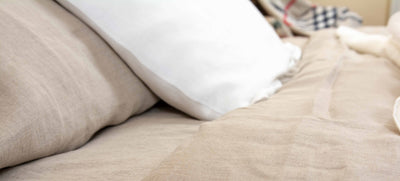
For sheets and duvet covers, a perfectly crisp hotel press can look appealing, but it can also make linen feel less relaxed. If you love that lived-in look, iron just the visible areas: pillowcases, the top third of the duvet cover, and any decorative borders. Use plenty of steam, keep the iron moving in a lift-and-press rhythm, and always use a pressing cloth on coloured bedding.
If you are ironing a fitted sheet, do not fight every curve. Smooth the corner seams, then press the main panels. Overworking elasticated edges often creates shine where the fabric is stretched.
Tea towels and napkins: the crease magnets
Kitchen linen is handled constantly and washed hard, so it can emerge with sharp fold lines. Iron these when slightly damp and press from the reverse if the towel has a waffle texture or any embroidery. If you want a crisp finish for table styling, press in sections and let each section cool flat before moving it. Cooling helps the fibres set without needing excessive heat.
Tablecloths: the high-visibility test
A tablecloth is where shine shows most, especially under evening lighting. Use a pressing cloth as standard and keep the iron temperature moderated. If the cloth is large, work on a padded surface and roll the finished parts loosely rather than folding sharply as you go. Sharp interim folds can create new creases that tempt you into extra pressure later.
Towels and bathroom linen: consider skipping the iron
Many linen towels are designed to dry quickly and feel gently textured. Heavy ironing can flatten that texture and reduce the airy feel you bought linen for in the first place. If you want a neater look, press only the edges and hanging loops, using steam and minimal pressure.
Common mistakes that create shine (and how to avoid them)
Shine is usually a technique issue, not a fabric flaw.
If your iron plate is slightly dirty, it can drag and create polished streaks. A quick clean (once cooled, following your iron manufacturer’s guidance) makes a bigger difference than people expect.
Overloading the ironing board also causes problems. When fabric is bunched, you tend to press harder to “force” it flat. Lay linen as smooth as possible, support the weight of larger pieces, and reposition often.
Another culprit is starch. Starch can give a crisp look, but it increases the risk of shine because it stiffens fibres and encourages surface polishing. If you love a structured finish on table linen, use starch sparingly and always with a pressing cloth. For bedding and clothing, you will usually get a more premium, natural finish without it.
What to do if linen already has shiny patches
If shine has appeared, it may not be fully reversible, but you can often soften the look.
Re-dampen the area lightly, turn the fabric to the reverse, and steam-press through a pressing cloth with lower heat. The goal is to reintroduce moisture and allow the fibres to lift rather than compress further.
If the fabric is robust (mid to heavy weight), a gentle wash and air dry can help the fibres relax again, especially if the shine came from over-pressing a single spot. Avoid tumble drying on high heat, which can set in a flattened look.
Makers’ corner: pressing linen by the metre
If you sew with linen - whether you are making cushion covers, aprons, or custom curtains - pressing is as important as stitching. Seams, hems and topstitching can turn shiny quickly because you naturally press harder to get sharp edges.
Use a pressing cloth and consider a clapper (a simple wooden pressing tool). Press with steam, then set the clapper down for a few seconds to lock in the crease as it cools. This gives you crisp seams without needing extra heat or repeated passes that polish the surface.
For delicate or deeply coloured linen, test on an offcut first. Linen varies widely by finish and dye, and it is far easier to adjust temperature and steam on a scrap than to discover shine on the front of a finished panel.
Linen looks best when it still looks like linen
A final mindset shift helps: linen is not meant to look plastically perfect. A subtle, natural rumple is part of its charm and part of why it feels so comfortable in a lived-in home. Iron for comfort, drape and tidy edges, not for a high-gloss flatness.
If you are investing in premium flax linen for bedding, table or making, you are choosing a fibre that rewards gentle care over force. And if you ever need guidance on fabric weight, weave, or home linen that is designed to age beautifully, PureLinen.IE builds that practicality into every piece - handmade in Ireland from quality Irish and European flax linen.
The next time you iron, slow down by just a fraction, add a pressing cloth, and let steam do the heavy lifting - your linen will stay matte, soft, and unmistakably natural.

Leave a comment