

Buying Linen Fabric by the Metre in Ireland
You can usually tell when linen is the right choice before you even cut it. It has that dry, clean hand-feel, a soft grain that relaxes the longer you live with it, and a quiet confidence that works in a minimalist home just as well as in a cosy, layered one. When you are buying linen fabric by the metre in Ireland, the real challenge is not finding linen - it is choosing the right linen for the job, and choosing it in a way that you will still be happy with after months of washing, sunlight, and daily use.
The good news is that linen is one of the most forgiving, long-wearing fabrics you can bring into a home. The trade-off is that not all linen behaves the same. Weight, weave, width, finish, and fibre blend make a noticeable difference, especially when you are sewing something that needs to sit neatly, withstand heat, or feel gentle against the skin.
Linen fabric by the metre Ireland: what to look for first
If you only check two things before you buy, make it the fabric weight and the width. They will decide how your finished piece drapes, how opaque it is, how it handles in the machine, and how much you need to order.Fabric weight is often listed in g/m² (GSM). Lighter linens are airy and floaty, and they can be beautiful for summer tops, curtains with a soft fall, or napkins that fold easily. The compromise is that very light linen can be a little more transparent, and it will show creases more sharply.
Midweight linen is the all-rounder for home projects. It has enough body for table linen, tea towels, cushion covers, and everyday garments, while still softening up quickly. Heavier linen is where you go when you want structure and durability - think bench cushions, aprons that take daily wear, tote bags, or upholstery-style applications. Heavy linen can feel firm at first; with washing, it relaxes into that familiar lived-in softness without losing its strength.
Width is equally practical. Standard widths are fine for smaller makes, but for anything large - bedding, wide curtains, full tablecloths - wider linen can reduce seams and waste. Wider cloth costs more per metre, but it can work out better value if it saves you piecing and lets a pattern layout fit efficiently.
Choosing the right linen weight for common home makes
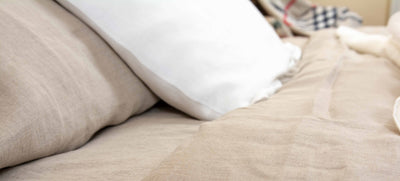
A lot of disappointment comes from expecting one linen to do everything. Instead, decide what you need the fabric to do.For bedding and pillowcases, comfort against the skin is the priority. A midweight linen with a smooth, even weave tends to feel naturally breathable without being coarse. If you prefer a more substantial, hotel-like feel, go a touch heavier, but avoid anything so heavy that it feels stiff at the seams.
For tea towels and napkins, absorbency and quick drying matter most. Linen excels here, but a balanced midweight gives you that satisfying swish while still drying fast on the rail. If you go too light, the towel may feel skimpy; too heavy and it can take longer to dry in an Irish winter kitchen.
For tablecloths, drape and opacity usually sit at the top of the list. Midweight linen gives a classic hang over the edge of a table. If your table is used hard every day, a slightly heavier weight is often the more practical choice, because it resists abrasion and holds up to frequent hot washes.
For curtains, the decision is mostly about light. Lighter linens create an airy, sun-washed look, but they will not give privacy at night with lights on inside. Midweight linen offers a better balance, and heavier linen can create a more tailored, insulating feel - particularly helpful in draughtier rooms.
Standard linen vs heavy linen vs linen-cotton blends
Pure linen is prized for breathability, strength, and the way it softens over time. It creases, of course, but the creasing is part of the character - the fabric looks alive rather than pressed flat.Heavy linen is still pure linen, just more substantial. It is ideal when you want a piece to hold its shape and survive constant use. The only caution is sewing ease: heavy linen needs a slightly stronger needle, thoughtful seam finishes, and a press that takes its time.
Linen-cotton blends can be a smart, practical option depending on the project. Cotton can add softness and reduce the sharpness of creasing, and it can sometimes make the fabric feel a little more familiar if you are new to linen. The trade-off is that blends may not have quite the same crisp breathability or longevity as a top-quality flax linen, and they do not always develop that distinctive linen character in the same way.
Understanding weave, slubs, and “natural” texture
People often worry about slubs - the tiny variations in thickness you see in many linens. In most cases, those are not flaws. They are part of the natural fibre and the weaving process, and they are one of the reasons linen looks so beautiful in daylight.If you want a clean, refined finish for embroidered pieces or a more minimalist look for bedding, choose a linen described as smooth or tightly woven. If you love a relaxed, organic texture for curtains, table linen, or rustic kitchen textiles, a more visibly textured weave can be perfect.
It is worth remembering that dye also changes perception. Natural, undyed linen shows every nuance of the fibre, while deeper colours can visually smooth the surface. If you are matching a room scheme, consider ordering a swatch first, especially when the fabric will sit beside painted walls, timber, or stone.
How many metres do you need? A practical way to think about it
Estimating yardage is where home projects often go off track. Pattern guides help for garments, but home makes are usually self-drafted. The simplest approach is to measure the finished size, then work backwards with seams, hems, shrinkage, and repeats.Linen will shrink, especially if it has not been pre-washed. As a general rule, plan for a bit of take-up in both length and width, and treat pre-washing as part of the making process rather than an optional extra.
For curtains, add length for headings and hems, and remember that a fuller look requires extra width. For tablecloths, decide on the drop (how far you want it to hang over the edge) and add generous hems so the cloth sits well after repeated laundering.
If you are ordering for multiple items - say, matching napkins and a table runner - it can be more cost-effective to buy a continuous length, because you can place pieces to minimise waste and keep dye lots consistent.
Care, laundering, and the “softens with time” promise
The care story is one of linen’s biggest selling points, but it depends on how you treat it early on.Pre-wash your linen before cutting if you can. It reduces shrinkage surprises and gives you a truer sense of the final hand-feel. Use a gentle detergent, avoid overloading the drum, and skip harsh whiteners. Linen does not need fabric softener; it becomes softer through use, and softener can leave a residue that dulls absorbency in kitchen and bathroom pieces.
Drying is a choice. Line drying keeps linen fresh and crisp. Tumble drying on low can increase softness, but too much heat can shorten fibre life over time. If you love that relaxed, natural look, you can fold or hang straight from the line and embrace the gentle creases. If you prefer a cleaner finish, press while slightly damp.
What makes “good linen” worth paying for
When you are buying linen fabric by the metre, it is tempting to shop purely on price. Linen can look similar on a screen. The differences show up later: how it wears at stress points, whether it goes limp or holds shape, how it responds to repeated washing, and whether it still looks good after a year of real life.High-quality flax linen tends to have consistent yarns, a stable weave, and a satisfying weight for its category. It will feel strong without feeling harsh. It also tends to age better - the fabric becomes softer and more comfortable while remaining durable, rather than thinning out or losing integrity.
Provenance matters here. Irish and European flax producers have long-standing expertise, and responsibly sourced linen supports better farming and processing standards. If sustainability is part of why you are choosing linen in the first place, it is worth looking for clear information on sourcing rather than vague “natural” claims.
Buying locally in Ireland: delivery, consistency, and support
One of the underrated benefits of buying linen in Ireland is practical: you can get advice that fits Irish homes and Irish weather. Linen for a bright south-facing room in July behaves differently than linen in a shaded kitchen that runs damp in winter.Buying from a specialist also helps when you need continuity - ordering more metres later to match cushions to curtains, or to remake a piece after you have tested a prototype. Dye lots can vary, so it is always wise to order enough for a full project upfront when matching matters.
If you want linen for both making and finished home textiles, it can be helpful to buy from a brand that works with linen daily, not as a side category. At PureLinen.IE, the focus is premium natural linen designed and hand made in Ireland, alongside maker-friendly linen fabrics in practical weights and widths for home sewing.

Leave a comment