

What Linen's Ancient History Tells Us
Long before linen was chosen for a well-made bed, a relaxed table setting or a durable tea towel, it was already associated with something precious - labour, status, cleanliness and care. Few household textiles have stayed relevant for as long. The ancient history of linen is not simply a story about fabric. It is a story about what people chose to place next to the skin, in the home and in sacred spaces when quality truly mattered.
That long reputation helps explain why linen still feels distinct today. It has never been the cheapest cloth to produce, and that is part of the point. Linen asks more of the grower, the spinner and the maker. In return, it offers breathability, strength and a natural hand-feel that synthetic fibres have spent decades trying to imitate.
The ancient history of linen begins with flax
Linen comes from the flax plant, and that origin shaped its value from the start. Unlike cloth that can be produced quickly or with little preparation, linen demanded knowledge at every stage. Flax had to be grown in suitable conditions, harvested carefully, retted so the fibres separated from the woody stem, then broken, scutched, heckled, spun and woven. Ancient communities did not prize linen by accident. They understood how much work lived inside every length of cloth.
Archaeological evidence places flax among the earliest plants used for textile production. In parts of the Near East and Europe, flax fibres appear in very early settlements, suggesting that people recognised its usefulness thousands of years before the classical world gave us written descriptions of textile trade. That matters because linen was not a passing fashion. It earned its place through performance.
For households, that performance was practical. Linen could be made fine and light for garments, or firmer and weightier for domestic use. It absorbed moisture well, felt cool in warm climates and wore in rather than wearing out quickly. Even in ancient societies with clear hierarchies of wealth, those properties gave linen broad appeal. The finest grades belonged to elites and temples, while coarser linens served everyday work.
Why ancient societies valued linen so highly
If you want to understand the ancient history of linen, it helps to look beyond clothing. Linen mattered because it moved through every layer of life. It appeared in dress, trade, burial customs, household storage, sails and ritual objects. Few fibres were so versatile.
In ancient Egypt, linen became especially important. The climate suited flax cultivation, and the fibre's cool, breathable quality made obvious sense in heat. Egyptian linen is often remembered for its association with mummification, but that can overshadow its daily role. Linen was worn as clothing, used in the home and traded as a marker of value. Fine white linen also carried ideas of purity and order, which gave it ceremonial weight.
That symbolic role was not unique to Egypt. Across ancient cultures, clean, well-woven cloth had social meaning. Linen could suggest refinement, discipline and wealth because producing it required time and skill. A beautifully woven textile represented organised labour and access to good raw material. In that sense, linen functioned a little like good joinery or well-fired pottery - useful, certainly, but also evidence of standards.
There were trade-offs, of course. Linen was labour-intensive, and very fine linen was not accessible to everyone. Wool could be warmer and, in some regions, easier to produce at scale. Cotton later became more widespread in many parts of the world for its own reasons. But linen held its status because no other fibre matched its exact balance of crispness, breathability and durability.
Linen in ancient Egypt, Greece and Rome
Egypt sits at the centre of most discussions about ancient linen, and rightly so. Surviving fragments show astonishing skill, from everyday cloth to exceptionally fine weaves. Linen wrappings preserved in tombs reveal not only ritual use but also technical confidence. Spinners and weavers were able to produce cloth with remarkable consistency, and some pieces remain impressive even by modern standards.
In Greece, linen appeared in clothing and household textiles, though wool remained dominant in many contexts. Climate, local production and social custom all shaped fibre choice. Linen garments were appreciated, especially in warmer weather, but they were not always the everyday default for every class. That is one of the useful corrections when talking about textile history - preference always depends on region, trade and purpose.
Rome expanded linen's role further through trade networks and domestic use. Linen served for tunics, undergarments, bedding, sails and household cloths. Roman writers refer to flax cultivation and linen manufacture with a practical respect that feels familiar even now. They knew the fibre was useful, but they also recognised quality differences. Not all linen was equal. Source, preparation and weave mattered then just as they matter now.
This is one of the strongest threads running from antiquity to the present. Linen has always rewarded discernment. A poorly processed fibre can feel rough or unstable. A well-made linen cloth softens beautifully with use, keeps its structure and lasts for years. Ancient buyers may not have spoken in modern fabric specifications, but they certainly understood the difference between ordinary and exceptional cloth.
What the ancient history of linen reveals about craftsmanship
Ancient linen production was slow by modern retail standards, yet that slower process is exactly why the material gained its reputation. Good flax fibre could not be rushed from field to finished textile without consequences. Each stage affected the final handle, strength and appearance of the fabric.
That has real relevance for anyone choosing linen for the home today. When a fibre has been valued for millennia, it is rarely because of marketing alone. It means generations of makers tested it in real conditions - on beds, against skin, in heat, in storage, through washing and repeated use. Linen stayed because it worked.
There is also a lesson here about natural irregularity. Ancient textiles were hand-made and often carried slight variations in yarn and weave. Those variations were not faults in the modern mass-produced sense. They were signs of a material shaped by hand and season. The best contemporary linen still retains some of that character. It should feel refined, but never artificial.
For makers and sewists, this history is especially meaningful. Linen's behaviour in cutting, sewing and laundering is part of a very old conversation between fibre and craft. It presses well, holds shape with enough body to be satisfying, and softens over time. Depending on weave and weight, it can suit bedding, curtains, table linens, aprons and relaxed upholstery accents. The right choice depends on use. A lighter linen offers drape and breathability, while a heavier linen gives more structure and resilience.
Why linen still belongs in the modern home
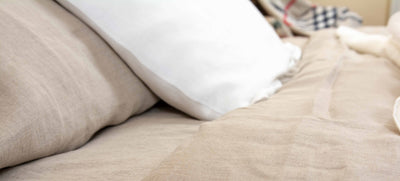
The oldest reasons for choosing linen are still among the best ones. It is breathable, absorbent, durable and comfortable against the skin. It ages well. It tends to become more supple with washing rather than losing its appeal after a short season. For bedrooms, that means bedding that feels cool, relaxed and lived-in in the best possible way. For kitchens and dining spaces, it means cloths and table linens that can handle regular use while still looking elegant.
Its sustainability story also feels less like a modern trend and more like a return to common sense. Linen comes from flax, a natural fibre with a long agricultural history. When sourced well and made with care, it offers an alternative to disposable home textiles and short-life synthetic blends. Ancient societies valued linen partly because it was worth the labour. That idea deserves renewed attention in homes that are tired of replacing lesser fabrics again and again.
At PureLinen.ie, that heritage still matters because provenance and workmanship matter. Irish and European flax linen carries forward a standard that customers can feel immediately - in the weight of the cloth, in its natural comfort and in how well it stands up to everyday life.
The ancient history of linen is, at heart, a record of people recognising a material that served them well and keeping it close. That is a useful thought when choosing textiles for your own home. Trends come and go, but some fabrics earn their place over thousands of years. Linen is one of them.

Leave a comment