

Linen Bedding Benefits: Comfort, Cool Sleep, Longevity
You know that moment when you slide into bed and the fabric either feels instantly relaxing - or slightly clingy, too warm, a bit synthetic? Linen tends to land firmly in the first camp. It has that clean, airy feel that suits Irish homes year-round, where bedrooms can swing from muggy summer nights to properly chilly winter evenings.
If you are asking what are the benefits of linen bedding, the short version is: it is breathable, hardworking, kind to skin, and it wears in beautifully. The longer version - the one that helps you decide whether it is right for you, which weight to choose, and what trade-offs to expect - is below.
What are the benefits of linen bedding for sleep comfort?
Linen is made from flax fibres, and those fibres behave differently to cotton or synthetics. Linen does not try to be “silky” or glossy - it aims for natural comfort and performance.It breathes exceptionally well
Linen’s structure allows heat to escape rather than build up. That matters if you sleep warm, share a bed, or wake up in the small hours feeling overheated. Breathability is not just a summer perk either. In winter, breathable bedding helps regulate the microclimate around your body so you are less likely to sweat, then get cold.It helps with temperature regulation
Good linen bedding has a balanced feel: cool to the touch when you first get in, then it settles quickly to your body temperature without becoming stifling. In Irish conditions - where central heating can dry the air, yet the night can still feel damp - that regulation can be the difference between tossing and turning and sleeping through.It manages moisture instead of trapping it
Linen is known for absorbing moisture and releasing it again, which is exactly what you want from bedding. If you perspire at night, the goal is not “waterproof” - it is comfort. Linen helps wick moisture away from the skin so you feel drier, with less of that sticky sensation that can happen with lower-quality blends.Skin-friendly benefits: a cleaner, calmer feel
People often come to linen for the look, then stay for how it feels on the body.It is naturally gentle for sensitive skin
Linen is a natural fibre and, for many households, it feels kinder than heavily processed fabrics. If you are prone to irritation, it can be worth choosing linen that is free from harsh finishes and made with quality dyeing processes.It stays fresher between washes
No bedding replaces washing, but linen’s breathability and moisture management can help it feel fresher day to day. That is useful for busy homes, guest rooms, or anyone who simply prefers the bed to feel crisp and clean.A note for very sensitive sleepers
If you have extremely reactive skin, the first few nights in linen can feel a little more textured than cotton sateen. That is not a flaw - it is the fibre’s natural character. The good news is that linen softens noticeably over time and with washing, without losing its strength.Durability: linen is built for the long haul
One of the most persuasive reasons to invest in linen bedding is how well it stands up to real life: frequent washing, seasonal changes, kids climbing in, pets, and the general wear that turns “pretty bedding” into a disappointment.Strong fibres, less fuss
Flax fibres are naturally strong, which is why linen has a reputation for longevity. A well-made linen duvet cover or sheet can remain part of your linen cupboard for years, and it will not lose its appeal the way some fabrics do when they start to thin or pill.It gets better with age
Unlike fabrics that look tired as they soften, linen tends to become more inviting. The hand-feel relaxes, the drape improves, and the bedding develops that lived-in luxury that still looks tidy when the bed is made.Sustainability through longevity
Sustainability is not only about the fibre source - it is also about how often you have to replace what you buy. Bedding that lasts longer reduces repeat purchasing and waste. Linen’s durability makes it a practical choice for anyone who wants a more considered home, not a constant cycle of replacing worn-out basics.Easy-care reality: what linen does (and does not) need
Linen has a reputation for being high maintenance, usually from people who have never owned it.Washing is straightforward
Most linen bedding can be washed at home. The key is treating it like a natural textile: avoid overloading the drum, use a gentle detergent, and do not overdo fabric softener (which can coat fibres and reduce absorbency). If you can manage cotton, you can manage linen.It dries faster than you might expect
Linen is not a heavy, water-holding fabric in the way some cotton weaves can be. Many people find it line-dries efficiently, which is helpful in Irish homes where tumble-drying everything is not always practical or desired.The wrinkle question - it depends on your taste
Linen creases. That is part of its charm and part of its honesty. If you want a perfectly pressed, hotel-smooth finish, linen may not be your favourite. If you like a relaxed, quietly luxurious bed, linen looks beautiful straight off the line or out of the dryer, simply smoothed by hand.The look: effortless, timeless, and easy to style
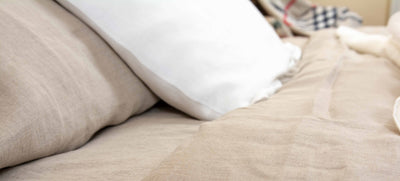
Linen bedding has a particular aesthetic: calm, natural, and not overly “done”. It suits modern interiors, classic homes, coastal palettes, and minimalist bedrooms equally well.The texture adds depth even in plain colours, so you can keep the room simple and still have the bed feel considered. Linen also pairs well with other natural materials - wool throws, wooden bedframes, woven rugs - without competing for attention.
Choosing the right linen bedding: weight, weave, and finish
Not all linen bedding performs the same way. If you want to feel the benefits, quality and specifications matter.Fabric weight affects feel and function
Linen is often described by weight (g/m²). Lighter linen can feel airier and is brilliant for warm sleepers, while heavier linen can feel more substantial and cosy, with a richer drape. There is no universal “best” - it depends on your bedroom temperature, your personal comfort, and whether you want crispness or cocooning.Pay attention to construction, not just fibre claims
Look for well-finished seams, strong closures (buttons or ties that feel secure), and sizing that suits your duvet and mattress depth. Good bedding is not only about the fabric - it is about how that fabric is cut and made.Pure linen vs linen-cotton blends
Pure linen delivers the full breathability and texture. Blends can be softer upfront and sometimes less prone to creasing, but you may give up some of linen’s performance and long-term character. If you are linen-curious and texture-sensitive, a blend can be a comfortable stepping stone. If you want the classic linen experience, go for 100% linen.The trade-offs: what to expect before you buy
Premium linen is an investment, and it should be treated like one. A few honest “it depends” points make the decision easier.Price is the obvious one: quality flax, good dyeing, and skilled making cost more. The counterpoint is cost-per-use - if you keep your linen for years, that initial spend can make more sense than replacing cheaper bedding repeatedly.
Texture is another. Linen is not glossy, and it will not feel like brushed microfibre. It is a natural, breathable weave with a distinct hand-feel. Many people fall in love with that, but if you crave ultra-smooth bedding from night one, you may prefer cotton sateen or a softer blend.
Finally, linen’s relaxed creasing is either a benefit or a bother. If your idea of a tidy bed requires ironing, you will need to decide whether you want to iron linen (you can) or embrace the lived-in look (most linen lovers do).
Why provenance matters for linen bedding
If you care about sustainability and comfort, where and how linen is made is not a small detail. Flax quality, responsible processing, and skilled craftsmanship all influence the end result - how it feels, how it washes, and how long it lasts.For buyers who value Irish craft and natural home textiles, choosing bedding that is hand made in Ireland using Irish and European flax linen can be a meaningful part of building a home that feels both luxurious and grounded. If you are exploring premium linen for the bedroom or buying linen fabric for your own making projects, you will find that focus at PureLinen.IE.

Leave a comment